What Is the Initial Temperature of Cooked Beef
Medium rare steak temp is 130–135°F, Medium steak temp is 135–145°F
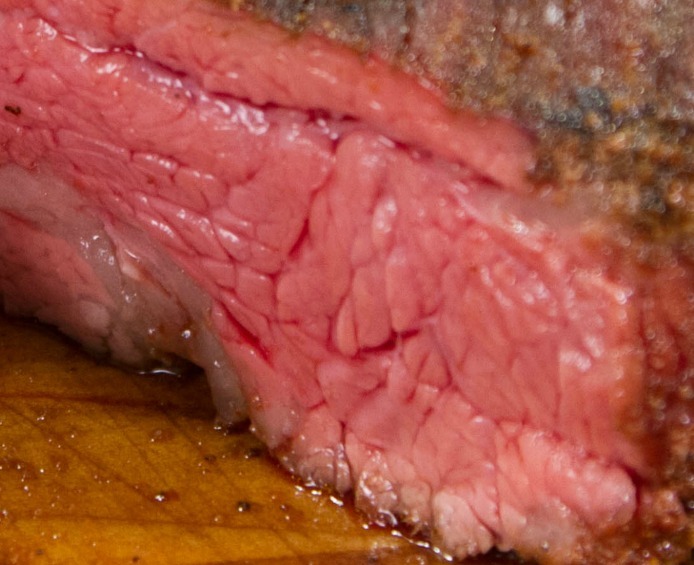
If yous honey your steak juicy and tender, so you probably love medium-rare steak. Cooked to 130–135°F (54–57°C), a medium-rare steak'southward muscle fibers are just starting to contract, but aren't all the same expelling all of their juices, and, for many people, that means perfection. For some, that straddles the line likewise close to uncooked, and they adopt something a niggling more noticeably washed. Medium steak temp is 135–145°F (57-63°C) and provides a slightly more fibrous, less raw-feeling steak, though also less juicy.
In truth, people dear steaks cooked many unlike ways, so today we're bringing you lot a whole mail on getting steak temps and getting them correct. We'll allow you in on the thermal secrets and critical temperatures that will help you cook your steak perfectly every time.
Contents:
- Are at that place unlike temperatures for different steaks?
- Steak temperature chart
- Tin can you lot approximate steak doneness past colour?
- How to temp a steak
- A note on carryover cooking in steaks
- Ane peachy method: contrary searing on the grill
Porterhouse steak and across: temps don't change
Many websites that requite information on steak doneness suspension the temperatures down past steak-type. In reality that is an unnecessary stardom, equally all steaks feel the doneness stages at the same temperatures. Whether you lot're cooking upwardly a porterhouse steak or a ribeye, medium doneness is 135–145°F (57–63°C). (The all-time way to go that temperature just right is, of form, to use a fast and accurate Thermapen ® ONE thermometer.)
To understand the reasons behind doneness, we need to look at what'due south happening on a physical, thermal level. Steak doneness depends on the ways that the proteins take been afflicted past the thermal energy they've been exposed to. When meat protein fibers are heated to rare doneness—120–130°F (49–54°C)—they begin to denature: coiling and changing their structure. This changes everything about them. They become less slick and translucent. They start to lose their protein-jump water. And naturally-occurring tenderizing enzymes in the meat become very active.
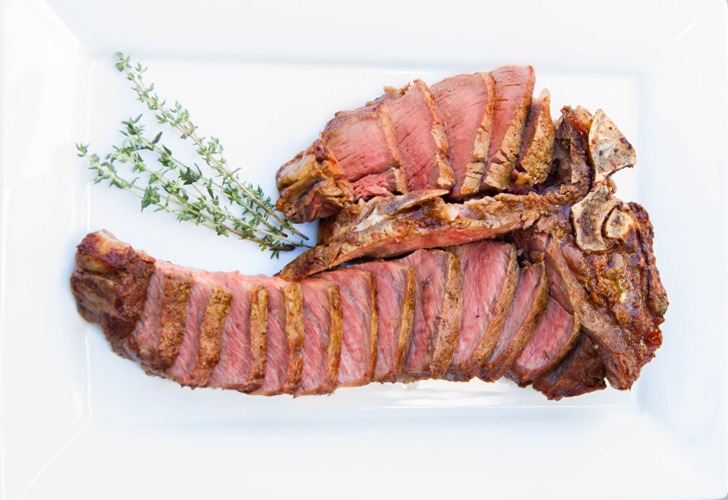
If you heat the steak farther to medium rare—130–135°F (54–57°C)—the protein fibers become slightly more than gristly, losing most of their slickness and turning an opaque lighter red. The tenderizing enzymes actually deactivate, and juices will run from the steak if cut. And here's the of import matter: this is the same for every cut of steak, regardless of blazon. The proteins in a filet don't behave any differently than the proteins in a NY strip.
And so why practice different steaks have different textures? That has more than to exercise with connective tissue and fatty content. Obviously a ribeye has more than fat than a filet and that will bear upon its texture. A strip steak has more connective tissue than a filet, making it slightly tougher. A skirt steak has a muscle structure that makes it naturally tough unless cut across the grain, but its medium-rare is still medium rare!
With that bit of understanding under our belts, we can take a look at a complete steak temperature chart.
Steak temperature chart
| Steak Doneness | Temperature (°F) | Temperature (°C) |
| Bleu Steak | 110°F | 43°C |
| Rare Steak | 120–130°F | 49–54°C |
| Medium Rare Steak | 130–135°F | 54–57°C |
| Medium Steak | 135–145°F | 57–63°C |
| Medium Well Steak | 145–155°F | 63–68°C |
| Well Done Steak | 155°F and up | 68°C and upward |
Judging steak doneness by color—don't
I thing you may observe in the above chart is the lack of descriptive colour information. I empathize that those pictures of steaks all piled atop each other at different doneness-levels are very appealing. But they don't have two very of import factors into account:
- Judging color is rather subjective and
- Color isn't even a good indicator of doneness anyway
If I tell you lot that a steak should be rosy and slightly dark in the center, that's not a precise statement. What you consider rosy and dark might exist, to me, pink and light. Authentic information virtually steak doneness cannot be conveyed via color descriptions.
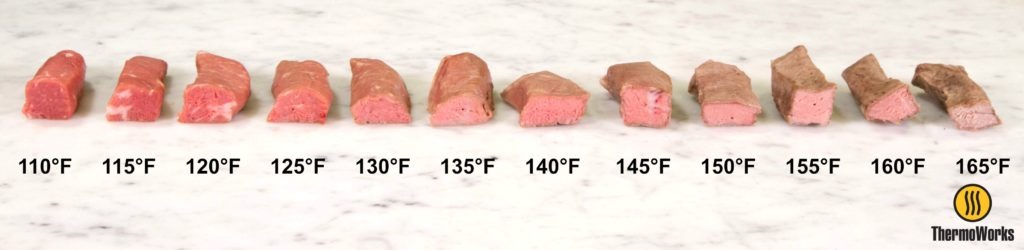
Fifty-fifty if we could hold on verbal colors for steak doneness, it still wouldn't thing every bit they don't always hold truthful. External factors can change the way the myoglobin—the poly peptide that colors the meat red—behaves. The presence of nitrates, carbon monoxide, and even certain vegetables can affect meat colour independent of meat temperature.
In truth, the only objective mode to know if your steak is washed is to take its temperature. And don't worry, sticking it with a probe does not brand it lose more juice!
Temping a steak—doing it right
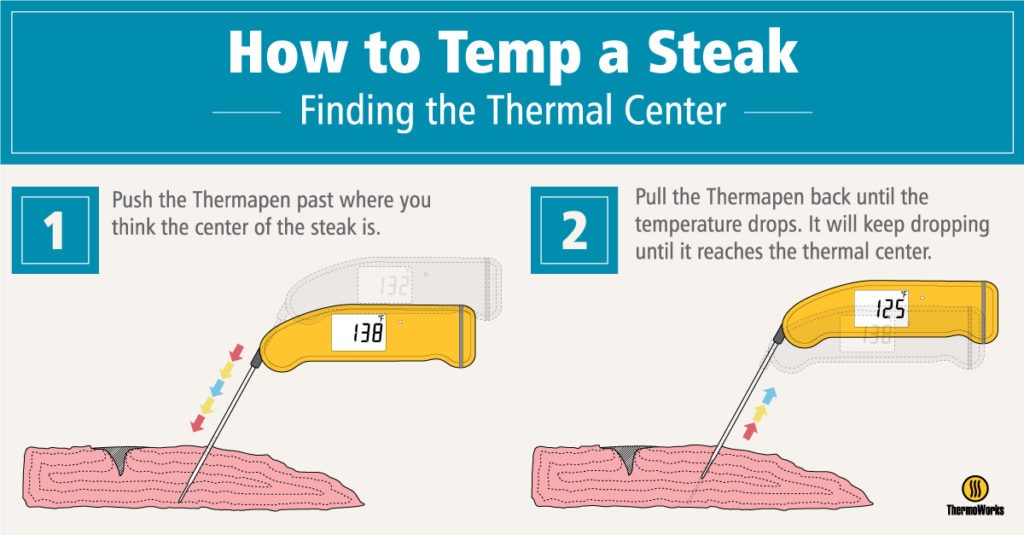
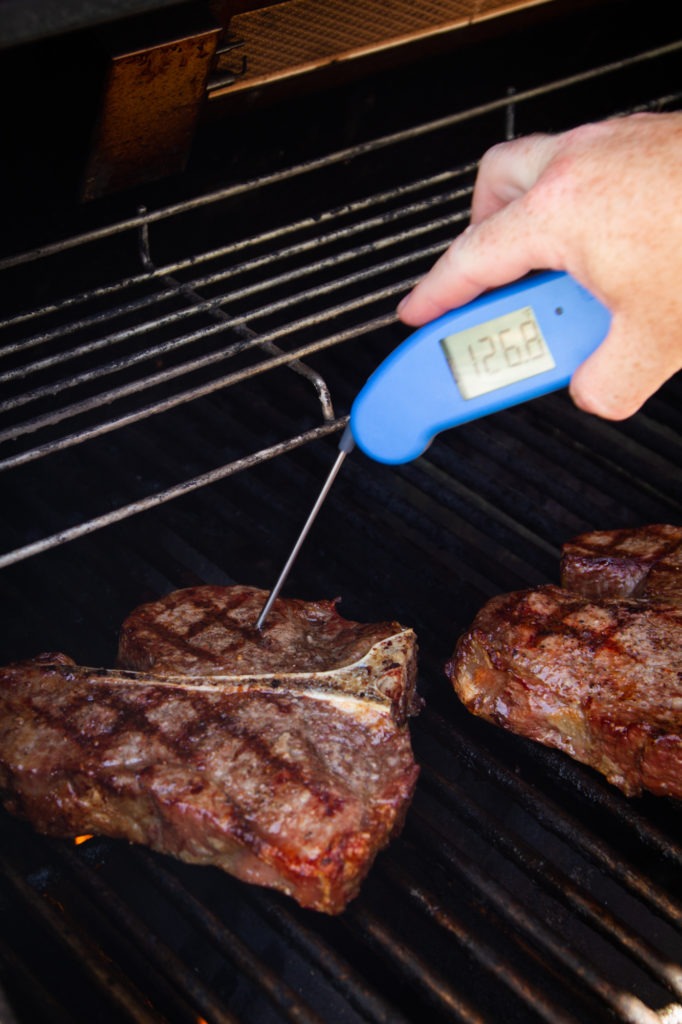
To temp a steak, you must be sure you're reading the temperature in the coolest part of the steak. The exterior of a steak is likely to have a significantly higher temperature than the center, then it's critical that you measure the thermal center of the steak. In gild to get that temp only right, apply a fast and accurate instant-read thermometer like the Thermapen ONE. Thermapen is i of the simply thermometers fast enough to prove changing temperature gradients as y'all pull the probe through meat in real time. Insert it most of the fashion through the steak, and draw information technology slowly out, watching the temperature modify as you lot move the probe through the temperature gradients.
A word about carryover cooking
Heat is non static. Estrus moves. In fact, oestrus tries its best to reach a land of equilibrium. When yous take a steak out of a hot pan, the estrus at the outside of the steak will piece of work its way into the steak, raising the temperature of the inside of the steak. This is what nosotros call "carryover cooking". Unless you're cooking your steak sous vide, you will experience carryover cooking, and y'all need to plan for it. Thinner steaks similar brim steak accept less thermal mass and thermal momentum and will experience less carryover than thick steaks. Thick steaks similar porterhouse or tomahawk accept more thermal mass and more carryover.
If you're looking for a pull-temp chart, I'm afraid I tin can't help you. Nosotros don't publish such a thing, as pull temps are surprisingly variable.The higher the oestrus, the more carryover there will exist considering the thermal gradients volition be wider. Something cooked in a 225°F (107°C) oven will carryover less than the aforementioned thing cooked in a 300°F (149°C) oven. So the pull temperature for whatsoever given target temp must be viewed by way of the rut at which the nutrient is beingness cooked.
Some other reason we can't have a pull-temp nautical chart is size. As I said above, larger items experience more carryover than smaller items. This may seem counterintuitive, but if yous think of the thermal mass of a whole prime rib vs. the thermal mass of a hamburger, you can see that at that place is a larger oestrus reservoir in the roast that can do carryover cooking.
Add to these the fact that estrus transfer is proportional to the square of thickness, and you can see that the chart we'd have to make would probably need to exist a rather complex 3-dimensional matrix. I can't speak for other sources, but I think our dedication to accuracy here at ThermoWorks prevents us from making a chart that would be anything curt of correct, and so we brand none at all.
In general, know that low heat carries over less, so your pull temps will be two–5 degrees beneath your target. The higher the cooking temp, the greater the pull gap, up to ten° or maybe even fifteen°F, depending on the size of the cut.
As Harold McGee says "The extent of afterheating depends on the meat'southward weight, shape, and center temperature, and the cooking temperature, and can range from a negligible few degrees in a thin cutting to 20°F in a big roast."
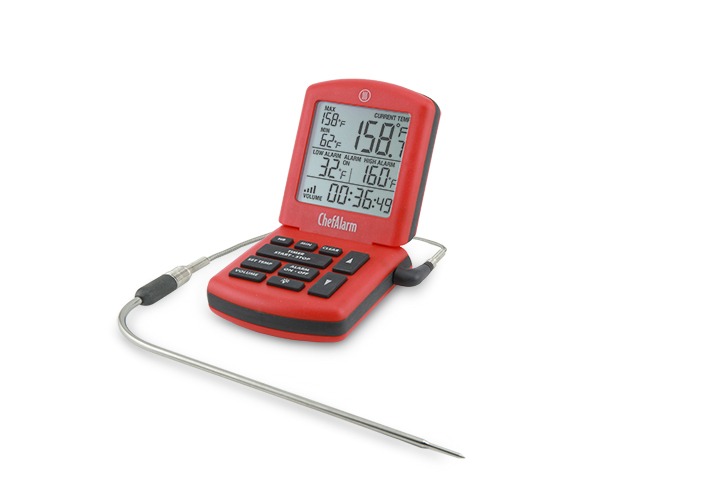
In full general, you can plan on 3–5°F (2–3°C) of carryover for a thinner steak and anywhere from five–7°F (3–4°C) carryover for larger ones. Using a ChefAlarm ® to track the carryover via the min/max role can help you understand how carryover behaves in your kitchen with your steaks.
Grilled reverse-sear steak cooking method
One of the best means to cook a steak is to use a reverse-sear method. In this method, you start cooking your steak at a low-ish temperature to reach an evenly-cooked desired temperature, so sear the steak for the concluding few degrees to give it that wonderful charry crust. Information technology works dandy on the grill with a two-zone setup or inside with a low oven and a hot bandage-fe pan.
Not only is the reverse sear a not bad way to get a steak done right, it's also a great way to get a lot of steaks done rapidly. You can cook them all at once in the lower temperature and then sear them off rapidly to serve them all at one time. We'll intermission down the steps of you hither, then you lot tin run across for yourself.
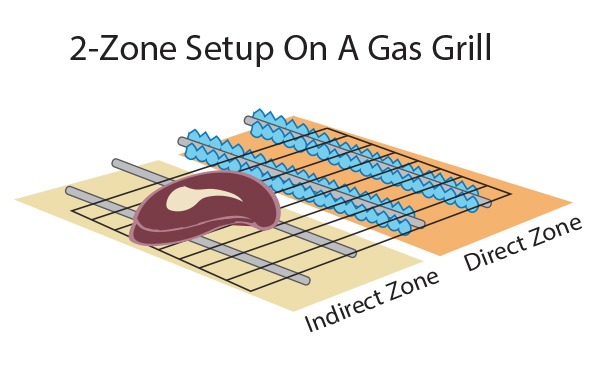
- Preheat your grill for indirect (two-zone) cooking past turning the burners on one side of the grill to loftier while leaving the others off or stacking your charcoal under one side of the grill.
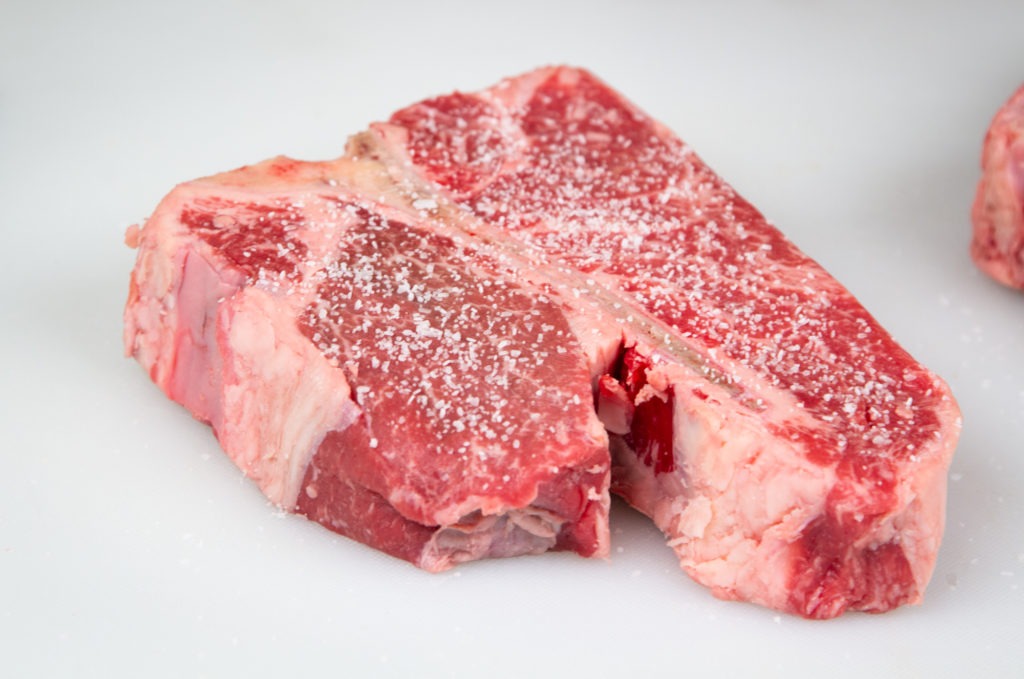
- Salt and pepper your steaks.
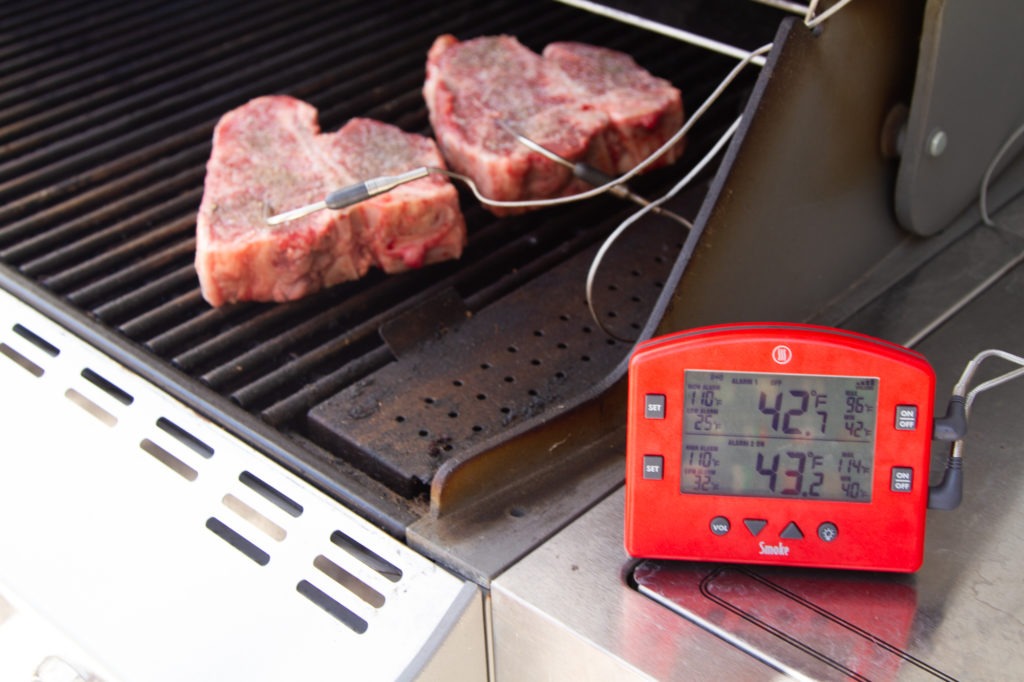
- Place steaks on the cooler, indirect-cooking side.
- Probe at least ane steak with the probe from a ChefAlarm and gear up the high-alarm for almost 20°F (11°C) cooler than you lot want your last temperature to be. I similar medium rare steak, and then I set it for 110°F (43°C). Make sure your cables don't run beyond the hot part of the grill.
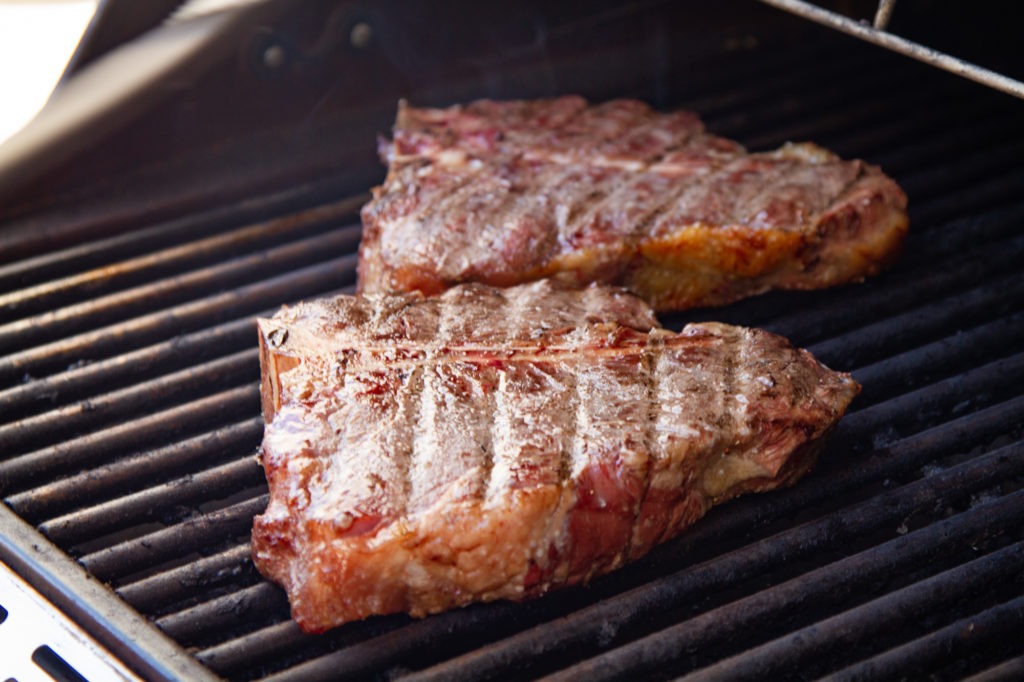
- When the high alarm sounds, move your steaks to the hot side of the grill and sear them over medium-high rut for 2–3 minutes per side.
- Use a Thermapen ONE to cheque the temperature of each steak as presently as y'all flip them over. Be aware that the last few degrees tin go quite quickly.
- As each steak reaches about 5°F (iii°C) below your desired finish temp, pull them from oestrus and let them to rest.
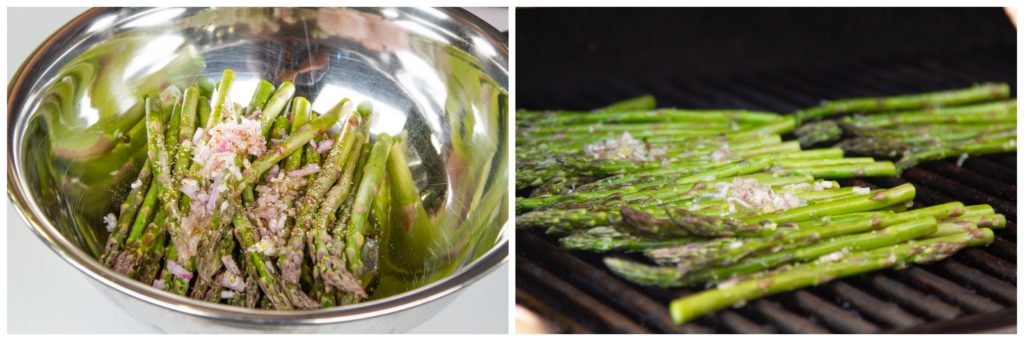
- Look, resting steaks is important and extremely difficult to do. I take found that a great way to really allow your steak residuum without just cutting correct in and eating it is to grill something else while the steaks rest. Cooking some asparagus tossed with a footling olive oil, salt, and pepper (mayhap some garlic, shallot, or lemon zest…) is a slap-up way to take your mind off the juicy, meaty steaks that are resting on that plate over there, calling your name.
- Eat those steaks!
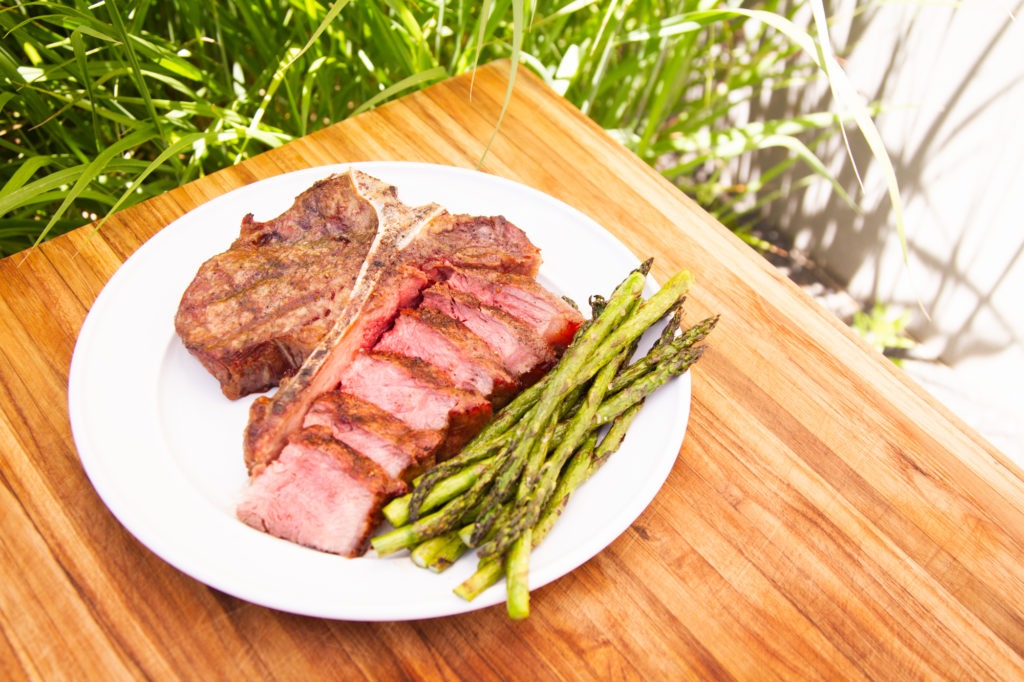
Far from being a subjective matter, cooking steaks to temperature with a Thermapen ONE is the best, most accurate manner to become your steak washed the way you want information technology. Ditch the idea of cooking by time or color, and get your medium steak (if that's how you similar information technology) done only right!
Shop now for products used in this postal service:


Source: https://blog.thermoworks.com/thermometer/steak-temps-getting-it-right/
0 Response to "What Is the Initial Temperature of Cooked Beef"
Post a Comment